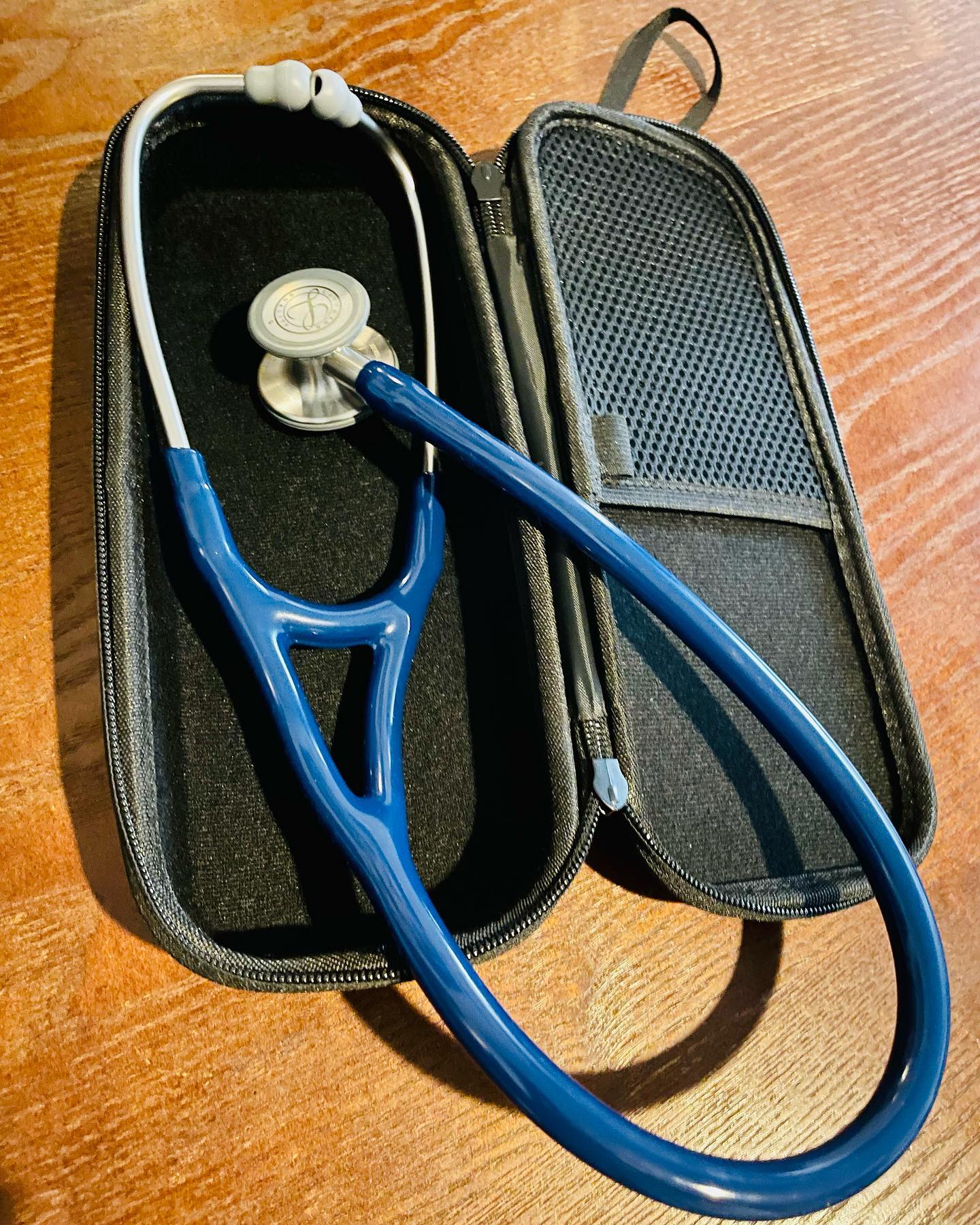
I left medical school after completing the preclinical curriculum and clinical clerkships. People ask why. The honest answer starts with: I loved it.
I went to medical school in my thirties with a biomedical PhD from Harvard Medical School and a decade of diabetes research behind me. I had spent that decade inside the medicine ecosystem — academic science, a postdoctoral fellowship, and consulting for healthcare and biotech startups. I went because I wanted to bring that work closer to the people I'd been doing it for. I loved my patients. I loved the clerkships—the long hours, the hospital at four in the morning, the feeling of being trusted with someone's worst day. The doctors I trained alongside were extraordinary; the patients, even more so. But I had also been around enough to know that no career is what you imagine before you do it. What surprised me wasn't the difficulty of the work.
I withdrew anyway.
I never stopped loving the work, but I started to see, with increasing clarity, that the work I most wanted to do for these patients was not the work I would do as their physician. The decisions that most changed their long-term outcomes—what was screened for, when, by whom; what counted as early; what guidelines said was treatable and what was deemed not yet a problem—were not made in the exam room. They were made upstream, by guideline committees, payer policies, RVU schedules, regulatory frameworks.
I watched patients land in clinic with a disease that had been measurable for years by tools the field had not yet agreed to use. I watched insurance authorizations override the considered judgment of physicians I respected. I watched residents I admired battle exhaustion that had nothing to do with the work itself.
The systemic strains on medical training and clinical practice today are real, and they are not the fault of the people inside them. Burnout among trainees and physicians is at unprecedented levels; the suicide crisis among medical professionals is real and deepening. None of this is a secret.
Standing inside it as a clerkship student, every rotation, I started asking a different question. I could have done this work. I would have wanted to. But that wasn't the question.
Will I have the most leverage from this seat?
The questions I had been working on as a researcher—about how the pancreas leaves signatures of dysfunction for years, even decades, before glucose declares them, signatures clinical practice does not yet measure—kept being illustrated by the patients I now sat with in clinic. The research wasn't an abstraction anymore. It was the thing that could have helped them, if it had been finished, validated, advocated for, and translated into the tools and guidelines their physicians actually had to work with.
My age and prior training mattered here. I came in with a research career already built, which gave me a frame for thinking about impact that I would not have had at twenty-two. The same observations a younger student might experience and move on from accumulated in me with weight. For my questions, in this stage of my life, the research seat had more reach than the clinical seat.
So I withdrew. I left UT Southwestern's MD program after completing the preclinical curriculum and clinical clerkships. I had earned a full-ride, merit-based Presidential Scholarship there. I gave years of full-time study to the path. I relocated to San Diego—with my wife, Marie, and our dog, Phoenix—to plant myself in one of the country's leading science and biotech hubs. I'm building connections at UCSD and across the city, and continuing the work.
I want to say two things clearly.
First: medicine remains one of the most important things a person can do. If you are considering it, I do not want this essay to discourage you. The world needs physicians; it has never needed them more. The systemic frustrations are part of what every physician will spend a career navigating. Many will do so with grace I can only admire.
Second: There's no map for this. I wouldn't prescribe my path to anyone.
I left because I owed those patients more than what I could offer from the seat I held.
You can love a path and still know it isn't yours to walk.
More essays on the blog.